Booking a hotel room always comes down to one practical question before anything else: will everyone actually fit? If you’re trying to figure out how many people can stay in a deluxe room, the answer is usually two to three guests but the real number depends less on the word “deluxe” and more on the specific hotel’s policy, its bed setup, and how it handles extra guests.
It’s a common assumption that “deluxe” automatically means more space or a higher guest limit. In reality, it’s just a category name, a way for hotels to signal that a room sits a step above standard, usually with more square footage and nicer touches. Whether it actually holds two people or three comes down to details that are worth understanding before you book.
What “Deluxe” Actually Means for Occupancy?
Most deluxe rooms are built with two adults in mind: a king or queen bed, a bit more breathing room than a standard room, and pricing that reflects double occupancy. Some hotels go a step further and allow a third guest, often with an extra bed or a rollaway added for a fee.
There’s a distinction worth keeping in mind here: what a room is designed for isn’t always the same as what it’s allowed to hold. A hotel might market its deluxe room as ideal for a couple, while still permitting a third guest under the right conditions. If you’re travelling with a child, this is exactly the kind of thing to ask about directly, since policies on young guests vary a lot from one property to the next.
The Factors That Actually Decide Occupancy
Bed configuration probably has the biggest say in this. A room with a single king or queen bed reads as a two-person space almost everywhere. Add twin beds, or space for a sofa bed, and a third guest becomes far more realistic.
Room size matters too, though maybe not in the way people expect. A bigger room can look like it has room for another guest, but square footage on its own doesn’t decide occupancy limits, fire codes and internal hotel policy usually do that job, regardless of how spacious a room feels when you walk in.
That’s really the heart of it: whatever number the hotel lists as its maximum occupancy is the one that matters. Everything else, the bed type, the room’s layout is just context that explains why that number is what it is.
Kids complicate things slightly, in a good way. Plenty of hotels don’t count young children toward the occupancy limit if they’re sharing existing bedding with their parents. That changes once a separate bed enters the picture, which is usually when age cut-offs and extra charges start applying.
What You’re Actually Paying For?
Occupancy aside, a deluxe room is usually a noticeably nicer stay than a standard one. Expect a bit more floor space, an upgraded bed, a private bathroom, Wi-Fi, a television, and air conditioning as standard. Some properties throw in a small seating area, extra storage, or a mini-fridge, depending on how the room’s been designed.
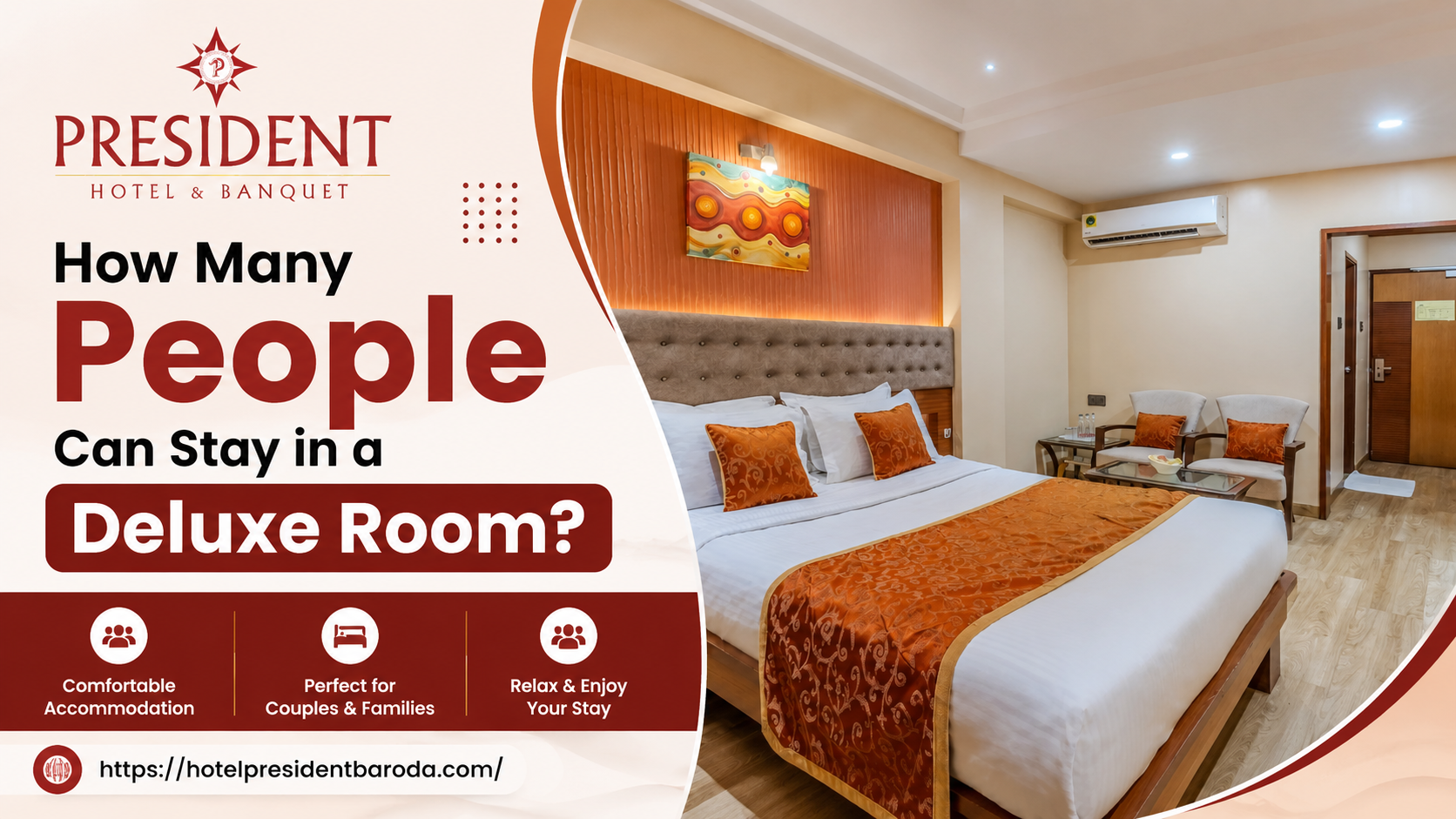
At Hotel President, the Deluxe Rooms are designed to provide a comfortable and cozy stay with approximately 300 sq. ft. of space. Each room features a queen-size bed with a twin-sharing option, split air conditioning, a Smart TV with satellite channels, and high-speed Wi-Fi. Guests also have access to 24-hour hot and cold water, while an iron and ironing board can be provided on request. For travellers looking for a premium deluxe room in Vadodara or a deluxe room near the railway station, these facilities make the room a practical choice for couples, solo travellers, and smaller groups.
Not every hotel offers the same list, though, so it’s worth reading the actual room description for wherever you’re booking rather than assuming it matches what you’ve seen elsewhere.
Thinking Through Different Group Sizes
Travelling solo, a deluxe room is honestly more space than most people need but it’s a nice upgrade if you’re staying a while and want the extra room to spread out.
For two people, this is really where the room shines, which is why a deluxe room, how many people search, usually comes down to whether two or three guests can comfortably share the space. It’s what deluxe rooms in vadodara are generally built around, and it tends to be the most comfortable, no-fuss option for couples or two people travelling together.
Three people is where things get situational. It can absolutely work, but only if the hotel allows it, an extra bed is available, and the room has enough space that it doesn’t feel like a squeeze once luggage gets added to the mix.
Number of Guests | Deluxe Room Suitability | What to Check |
1 | Comfortable, extra space | Personal preference |
2 | Ideal fit | Bed configuration |
3 | Depends on hotel policy | Extra bed availability and cost |
4+ | Usually not suitable | Family rooms or suites |
Questions Worth Asking Before You Book
A little homework before booking goes a long way. It’s worth finding out the room’s maximum occupancy, what beds it comes with, whether an extra one can be added, and if that adds to the cost. If you’ve got kids along, ask how the hotel treats them for occupancy purposes the answer isn’t always what you’d assume. And if three of you are sharing, it doesn’t hurt to ask about the room’s actual dimensions, since listings don’t always give a real sense of the space.
Most of this is answered on the hotel’s website, but a quick message to the front desk usually clears up anything that isn’t.
Deluxe vs Standard, Guest by Guest
Factor | Standard Room | Deluxe Room |
Space | Generally more compact | Generally more spacious |
Solo traveller | Suitable | More comfortable |
Two guests | Suitable | Often the better experience |
Third guest | Depends on policy | Depends on policy |
Longer stays | Can feel compact | Usually more livable |
Notice that the “third guest” row reads the same for both room types. That’s intentional; a deluxe label doesn’t automatically unlock more occupancy. That decision sits entirely with the hotel’s own policy, not the room’s category name.
Matching the Room to Who’s Travelling
If it’s just you, either category works fine; deluxe just buys you more room to spread out. Two adults will usually find the deluxe option a natural fit, and probably the more comfortable one. Add a child to that mix, and it’s worth double-checking the occupancy cap and how the hotel counts younger guests before locking anything in. Three adults sharing one room need to confirm an extra bed is genuinely available, not just theoretically possible. And once you’re at four or more, a single deluxe room usually isn’t the right call connecting rooms, family rooms, or suites tend to handle bigger groups far better.
Conclusion
The word “deluxe” tells you far less about occupancy than most people assume walking in. What actually decides the answer is the hotel’s stated maximum, the beds in the room, and whether an extra one can be added if needed. For two guests, it’s usually an easy, comfortable call. For three, it’s just worth a bit of checking beforehand.
If you’re still working out how many people can stay in a deluxe room for your own trip, the simplest move is to go straight to the source, a quick look at the hotel’s room details, or a short message to their front desk, will save you any guesswork once you actually arrive.
FAQs
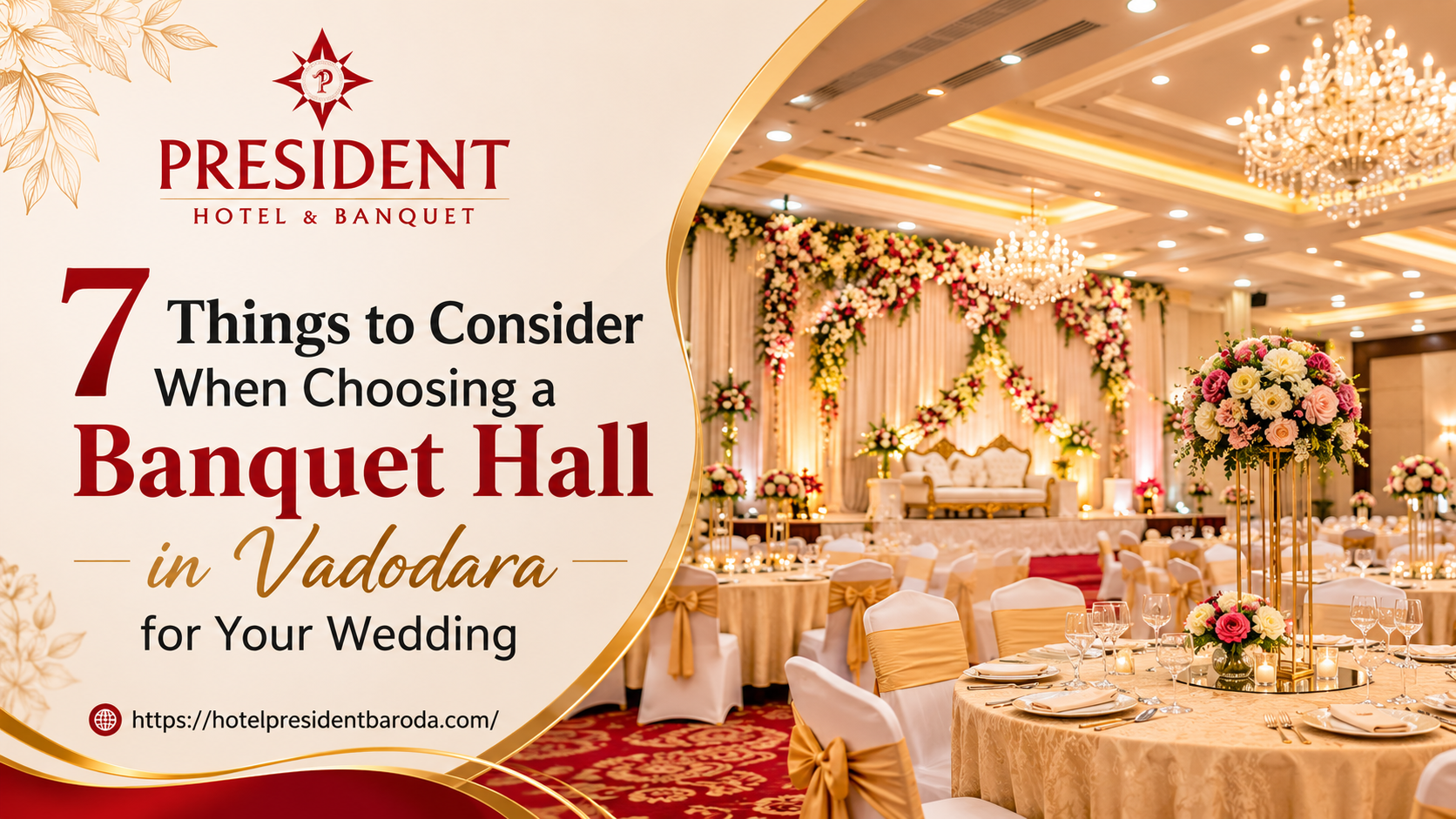
Start with your guest count and budget, then shortlist a few venues that fit both. Visit in person, taste the food, and insist on a written quote. Parking and location convenience matter just as much as how the hall looks, since they shape the actual guest experience on the day..
A rough rule of thumb is 8 to 10 square feet per guest for seated events, a bit less for standing receptions. Always ask for capacity separately under each layout, since venues often quote their loosest possible arrangement as the "maximum."
One vehicle for every three or four guests is a reasonable starting estimate, though it depends on local habits. Ask the venue directly about total capacity and valet service, particularly if your event lands during peak evening traffic.
Ask about capacity under different layouts, catering flexibility, a full written cost breakdown, parking numbers, décor restrictions, and what happens if there's a power cut or sudden rain. Getting these answers early avoids most disputes that crop up closer to the date.
Seating comfort, food quality, parking, and honest pricing usually matter more to guests than décor. People remember long queues and confusing parking far longer than they remember the centerpiece arrangements.